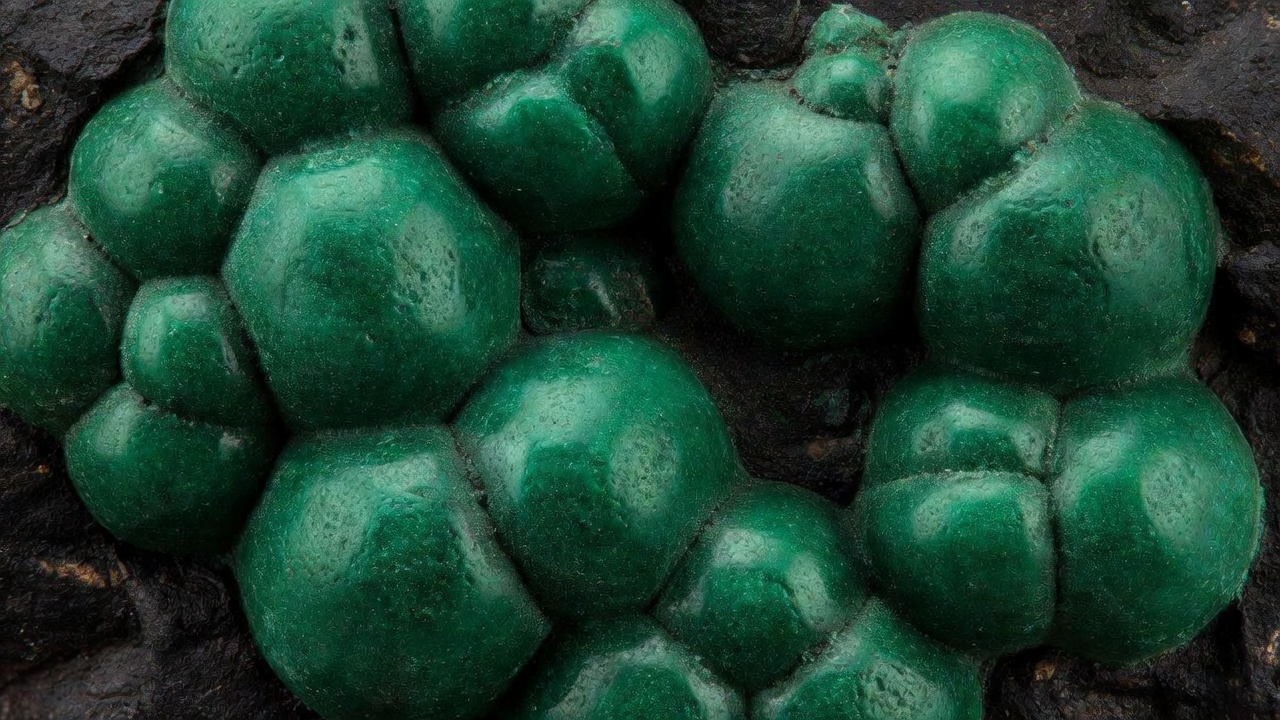
An unusual specimen should sharpen your questions, not lower the standard of evidence. Rounded growths, branching patterns and unexpected outlines may preserve ordinary physical processes operating under distinctive conditions. Start by describing the form, checking the locality information and separating the mineral itself from the rock supporting it. An unfamiliar object is not necessarily an uncommon species.
Ask what “rare” actually describes
A mineral species may be known from very few documented localities. Alternatively, a widespread species may occur in an uncommon habit, unusually large crystals or an exceptional association. A specimen can also be scarce in the collecting market simply because access is restricted. These are different circumstances, and none can be established merely by a seller's label.
Species rarity is tied to reliable occurrence records and correct identification. A modest-looking grain may matter scientifically because it contains an unusual chemical combination. Conversely, a spectacular quartz cluster can consist of a common species. Scientific interest does not provide a price estimate, and this guide does not authenticate specimens, grade gemstones or offer investment advice.
Recognize replacement and inherited shapes
A pseudomorph preserves the outward form of an earlier mineral while its composition or internal material changes. Pyrite can alter to iron oxyhydroxides while retaining a cubic outline. The resulting shape may point toward an earlier mineral, not the present composition. This is one reason external geometry cannot always settle an identification.
Replacement is a process, not an automatic diagnosis for every odd-looking specimen. A coating can conceal an intact crystal; a cast may preserve an empty shape; an intergrowth may create an apparent outline by coincidence. Look at broken edges already present, relationships between layers and any analytical history. Do not cut or dissolve a specimen simply to confirm a visual suspicion.
In your notebook, distinguish “cube-shaped brown material” from “iron oxyhydroxide after pyrite.” The first describes visible evidence. The second proposes a sequence that requires additional support. A documented locality, associated minerals and laboratory work can turn a plausible explanation into a stronger interpretation.
Read rounded, branching and hollow growth
Botryoidal aggregates consist of rounded masses resembling a bunch of grapes. Their interiors may show radiating fibers or layered growth, but the exterior alone does not reveal every detail. Malachite and hematite provide familiar examples of minerals that can develop this habit. A fresh, neutral-light photograph helps separate actual surface texture from highlights.
Dendritic patterns resemble branches and can develop when growth favors advancing tips. Manganese oxide dendrites on rock surfaces are often mistaken for fossil plants. Their branching geometry is not proof of biological origin. Hollow or skeletal crystals likewise reflect differences in growth across a surface; conditions at edges can favor faster growth than conditions at the centers of faces.
Connect unusual chemistry to a real place
The Ilímaussaq alkaline complex in Greenland and the Khibiny massif on Russia's Kola Peninsula are important examples of unusual igneous chemistry producing diverse mineral assemblages. At Mont Saint-Hilaire in Quebec, mineralogical interest is also linked to a chemically distinctive geological setting. These places are not interchangeable sources of every unusual mineral; locality records need to be checked species by species.
Tsumeb in Namibia is known for complex ore mineralization and an extensive history of mineral study. The particular position of a specimen within an ore body can matter as much as the mine name. Oxidation, fluid movement and changing chemical conditions may create mineral assemblages quite different from those deeper in the deposit.
New species recognition depends on analytical characterization and review through the International Mineralogical Association's Commission on New Minerals, Nomenclature and Classification. A striking photograph or a newly coined trade name does not establish a new species. Useful evidence can include chemical analysis and crystallographic data, interpreted by specialists using suitable methods.
For your own finds, preserve labels, acquisition history and legal provenance. Exact sensitive coordinates should not be published casually, and collecting permission should never be inferred from an online locality entry. A well-documented common specimen can teach more geology than a poorly documented object promoted as extraordinary.
Check a claim before repeating it
Consult Mindat for reported occurrences and references, and the International Mineralogical Association for nomenclature resources. Treat database entries as starting points for checking original descriptions, not substitutes for testing your specimen.
Next: follow the formation history