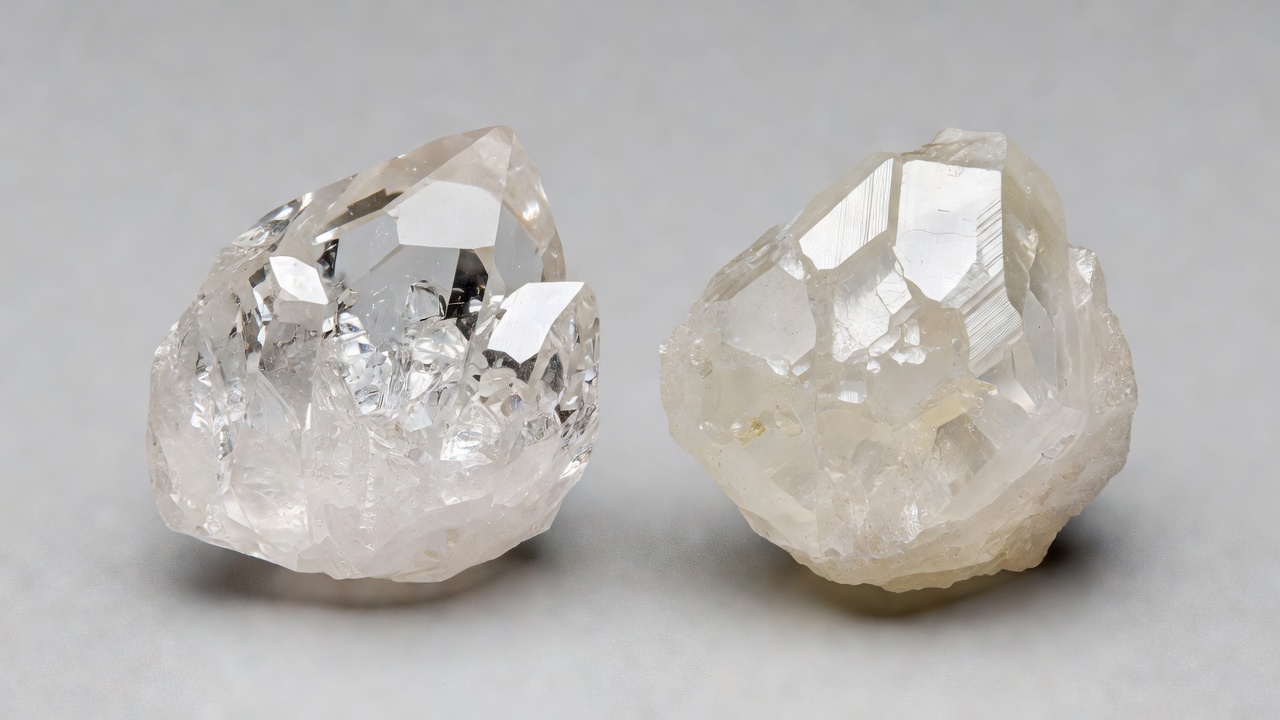
A useful identification is a hypothesis supported by observations. It should explain more than one property and survive attempts to find contradictions. Begin with a notebook entry rather than an image-search result: where the specimen came from, what is visible and which features remain uncertain. “Unknown pale mineral in basalt” is a sound starting description when the alternative is a confident but unsupported name.
Preserve context before testing
Assign a simple specimen number and keep any existing label with it. Record the locality as accurately as you legitimately know it, distinguishing a verified collection site from a dealer's account. Do not publish sensitive coordinates or collect without permission. A locality helps assess plausibility, but it does not make an identification true simply because a candidate is reported nearby.
Take an overall photograph with a scale, followed by close-ups of representative surfaces. Use diffuse daylight or a neutral lamp and avoid filters. Include the matrix and neighboring minerals. Photograph dry material first; wetting can change appearance and may damage water-sensitive specimens. Describe color, transparency and luster separately instead of combining them into a trade-style name.
Inspect without making dust. Some minerals contain hazardous elements or occur as harmful fibers, and an unidentified material should not be assumed safe. Never taste, grind, heat or casually acid-test an unknown specimen. Keep it away from food, children and pets, and wash your hands after handling. If loose fibers or powder are present, stop handling and seek qualified advice.
Compare properties that answer different questions
Luster describes interaction with reflected light: metallic, vitreous, pearly and other terms. Transparency describes transmission through the material. Surface weathering can alter both. Crystal habit concerns outward growth form, while cleavage concerns preferred breakage. These properties contribute independent evidence and are more useful together than a list of shades.
Hardness is resistance to scratching, not resistance to impact. Friedrich Mohs's relative scale places talc at 1 and diamond at 10; the intervals are not equal. For familiar reference points, calcite is 3, fluorite 4, apatite 5, quartz 7 and corundum 9. A scratch can permanently damage a specimen, and a loose powder mark can be mistaken for a scratch.
Do not perform a hardness test on an unidentified potentially hazardous material. If a safe, expendable sample is available and testing is appropriate, use controlled reference materials and inspect the result carefully. Household objects vary in hardness and coatings. An intact display crystal is generally the wrong place to experiment.
| Property | Quartz | Calcite |
|---|---|---|
| Mohs hardness | 7 | 3 |
| Cleavage | None | Three directions, rhombohedral |
| Common breakage clue | Conchoidal fracture | Repeated cleavage planes |
| Color | Highly variable | Highly variable |
Know the limits of the familiar tests
Streak is the color of a mineral's powder, often observed on unglazed porcelain. It can distinguish some metallic-looking minerals, but harder materials may scratch the plate rather than leave a useful streak. The test creates powder and damage, so it is unsuitable for unknown hazardous specimens. A streak result is not a universal species-level answer.
Magnetic response can narrow a candidate list, but attraction to a magnet does not prove that the whole specimen is magnetite. Tiny inclusions or an attached fragment may be responsible. Density can also be useful, yet porous material, mixed minerals and trapped air complicate informal measurements. Avoid immersion if water could damage the specimen.
Fluorescence is a response to excitation under particular conditions, not a unique mineral fingerprint. Different specimens of the same mineral may respond differently, and different minerals can produce similar colors. Ultraviolet sources also require appropriate eye and skin protection. No optional test is worth introducing a new hazard merely to improve a casual guess.
Use contradictions and seek the right analysis
Write a short candidate list with supporting and conflicting evidence. If a proposed calcite specimen consistently behaves like a much harder material, revisit the proposal rather than explaining the conflict away. The sample may contain several minerals, or the observed property may belong to a coating instead of the underlying crystal.
Some species cannot be distinguished reliably by hand specimen. X-ray diffraction can identify crystalline phases; Raman spectroscopy can provide diagnostic vibrational information; electron-beam methods can investigate composition. Method suitability, sample preparation and interpretation matter. Chemical data alone may not establish the full crystal structure, and an instrument result still needs geological context.
A local museum, university geology department, mineral society or qualified laboratory may help direct the next step, although not every institution accepts public identification requests. Ask about scope, fees and whether testing is destructive before supplying a sample. Keep the conclusion calibrated: “consistent with quartz” is different from a documented analytical identification.
Prepare an observation record
Our local message tool helps format the locality, visible properties and your question. It does not upload photographs or send a message automatically.
Check general mineral data through Mindat and laboratory terminology through the Gemological Institute of America. For more on what photographs can establish, visit the specimen FAQ.